







Your Trusted Growth PartnersSmart Demand Gen
Systems For B2BWe help B2B Tech, SaaS, & Enterprise IT Consulting companies define their ICP, design their GTM strategy, and create intelligent, AI-powered demand systems that attract and convert the right buyers.Our ServicesContact UsFrom Lead To ConversionDemand Strategies
For Predictable, Scalable GrowthIncrease qualified pipeline and accelerate your deal velocity with intelligent demand generation for the age of AI.Our ServicesContact Us
Buyer Evolution
In The Age of A.I.
B2B Buyers Have Changed Fundamentally
Today’s B2B buyers are more informed, more independent, and increasingly guided by AI, peer insights, and digital research long before they engage with sales. To win their attention, your marketing partner must know how to:
Scaling a SaaS business demands more than product excellence. It demands a demand engine that builds pipeline predictably, engages the right buyers at every stage, and converts interest into measurable revenue growth.
Complex technology deserves an equally sophisticated go-to-market approach. For companies operating in AI, cybersecurity, data infrastructure, and cloud - we build demand generation programs that establish category authority and accelerate enterprise pipeline.
In a market defined by undifferentiated messaging and relationship-dependent growth, the firms that win are those that lead with authority, command visibility, and build pipeline that extends well beyond referrals and RFPs.
B2B demand generation is the process of creating awareness, interest, and intent for your product or service among your ideal business customers. It focuses on attracting and nurturing prospects until they are ready to engage with sales.
2 How is demand generation different from lead generation?
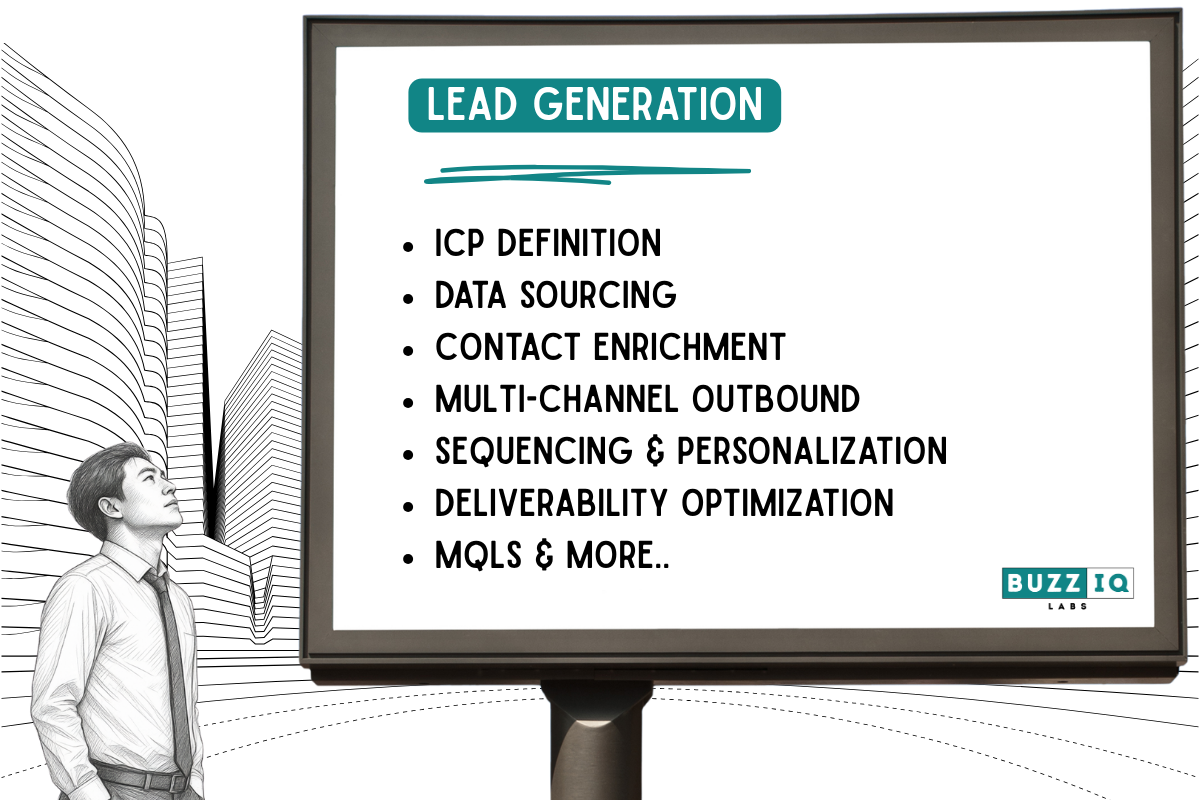
Demand generation builds awareness and interest across the buyer journey, while lead generation focuses on capturing contact information. Demand generation creates demand, while lead generation converts that demand into leads.
3 Why is demand generation important for B2B companies?
B2B buyers conduct extensive research before making decisions. Demand generation ensures your brand is visible, credible, and trusted throughout this journey, increasing your chances of being shortlisted and selected.
4 What are the key components of a B2B demand generation strategy?
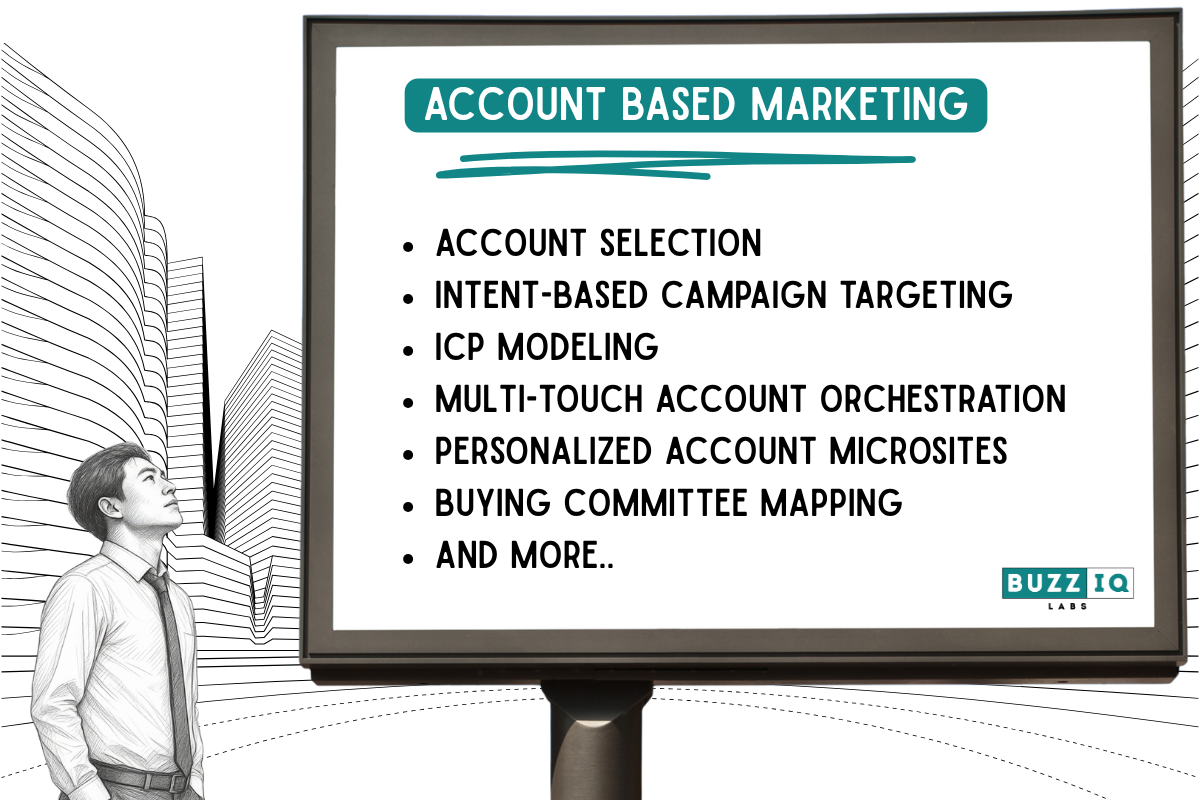
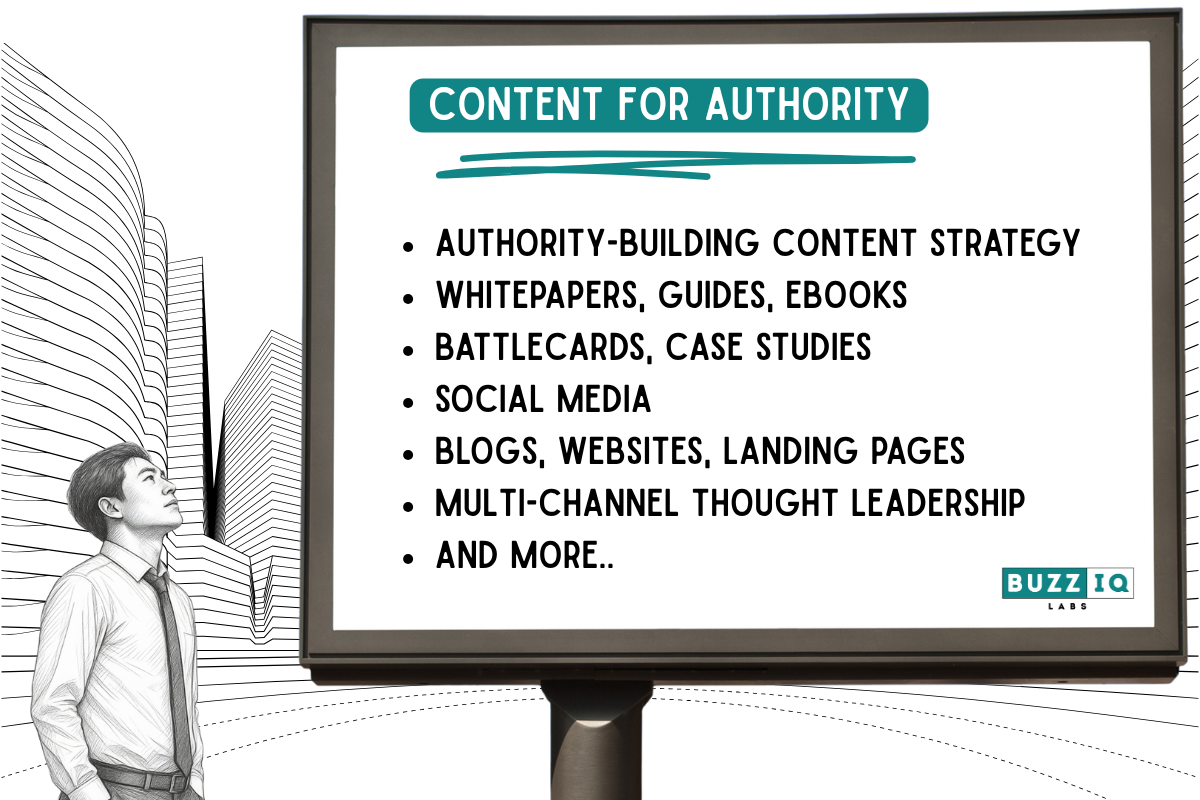
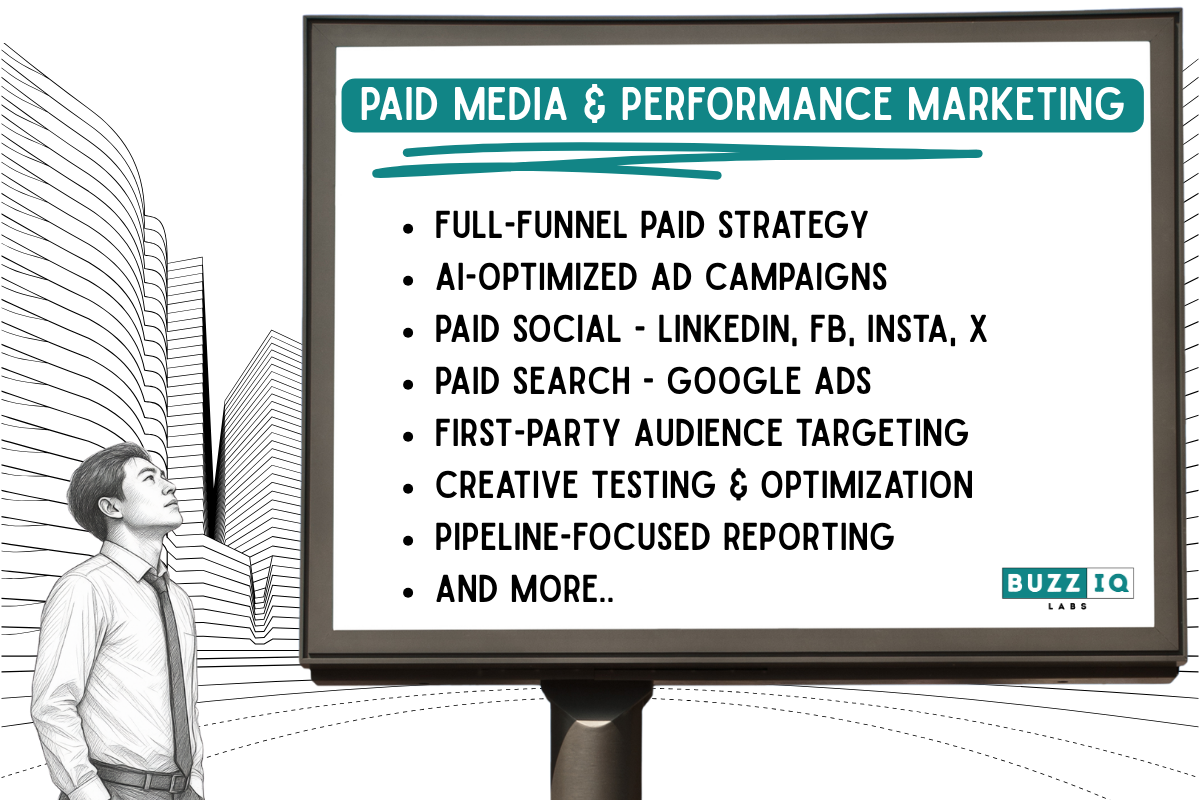
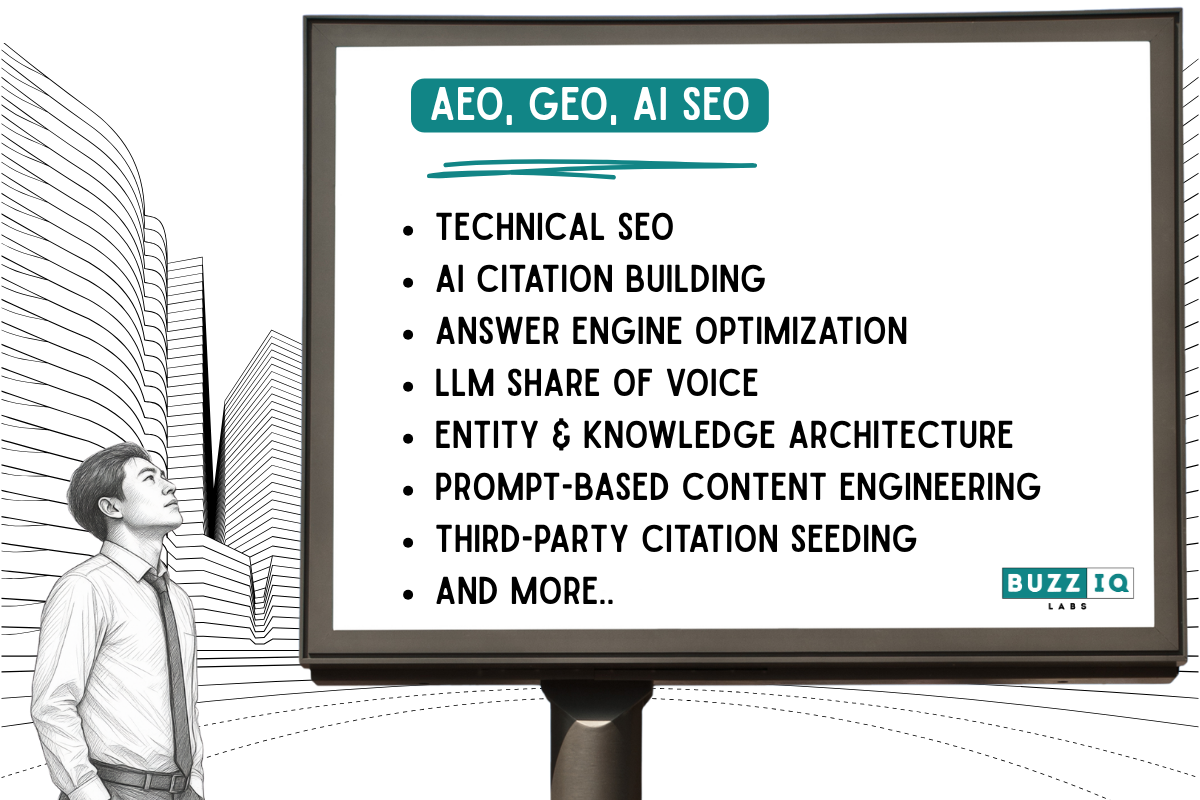
A strong strategy includes content marketing, SEO, AEO, paid media, account-based marketing (ABM), and analytics. At BuzzIQ Labs, these components are integrated into a unified system designed to drive consistent pipeline growth.
5 What role does content play in demand generation?
Content builds awareness, educates buyers, and establishes trust. High-quality, authoritative content positions your brand as an expert and helps guide prospects through the decision-making process.
6 How does SEO support demand generation?
SEO helps your content appear when potential buyers search for solutions. It drives high-intent traffic, ensuring your brand is discovered during critical research phases.
7 What is AEO (Answer Engine Optimization) in demand generation?
AEO focuses on optimizing content so it can be understood and recommended by AI systems and answer engines. BuzzIQ Labs helps brands structure content to appear in AI-driven search results and conversational queries.
8 What is Account-Based Marketing (ABM)?
ABM is a targeted strategy where marketing and sales focus on a defined set of high-value accounts. It uses personalized campaigns to engage key decision-makers and accelerate deal cycles.
9 How does paid media contribute to demand generation?
Paid media accelerates visibility by targeting specific audiences across platforms like LinkedIn and Google. It helps reach decision-makers faster and generate immediate engagement and pipeline opportunities.
10 What is a B2B marketing funnel?
A B2B marketing funnel represents the stages a buyer goes through—from awareness to consideration to decision. Effective demand generation strategies ensure prospects move smoothly through each stage.
11 How do you measure demand generation success?
Success is measured using metrics like pipeline generated, conversion rates, cost per acquisition (CPA), and revenue contribution. The focus is always on business impact rather than vanity metrics.
12 What is a marketing-qualified lead (MQL)?
An MQL is a prospect who has engaged with your marketing efforts and meets predefined criteria that indicate potential interest in your offering.
13 What is a sales-qualified lead (SQL)?
An SQL is a lead that has been vetted and is ready for direct sales engagement. These leads show strong intent and are closer to making a purchase decision.
14 How long does B2B demand generation take to show results?
Demand generation is a long-term strategy. While paid media can deliver quicker wins, channels like content and SEO typically take 3–6 months to generate consistent results.
15 What is multi-touch attribution in demand generation?
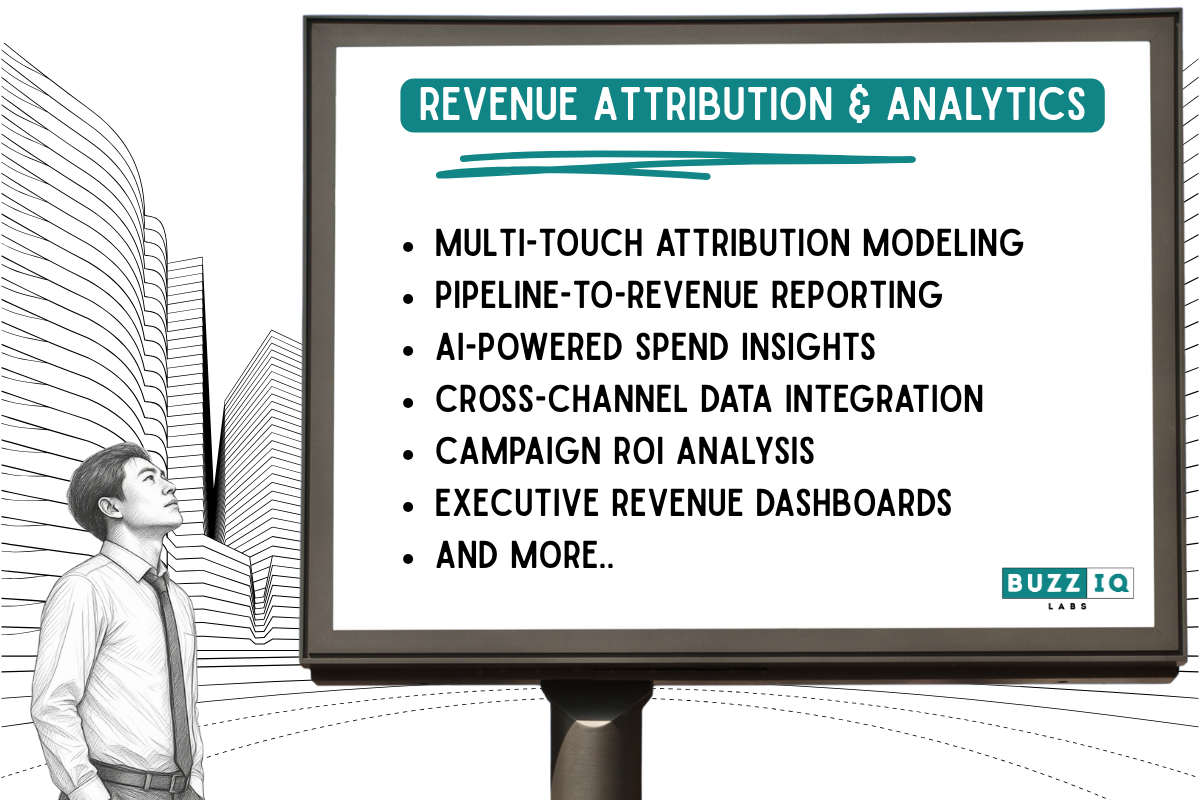
Multi-touch attribution assigns value to multiple interactions a buyer has with your brand before conversion. BuzzIQ Labs uses this approach to help businesses understand which channels truly drive revenue.
16 How important is personalization in B2B demand generation?
Personalization significantly improves engagement and conversion rates. Tailored messaging ensures your communication resonates with specific audiences and decision-makers.
17 What channels are most effective for B2B demand generation?
Effective channels include LinkedIn, Google Search, email marketing, content marketing, and webinars. The right mix depends on your target audience and industry.
18 How does CRO impact demand generation?
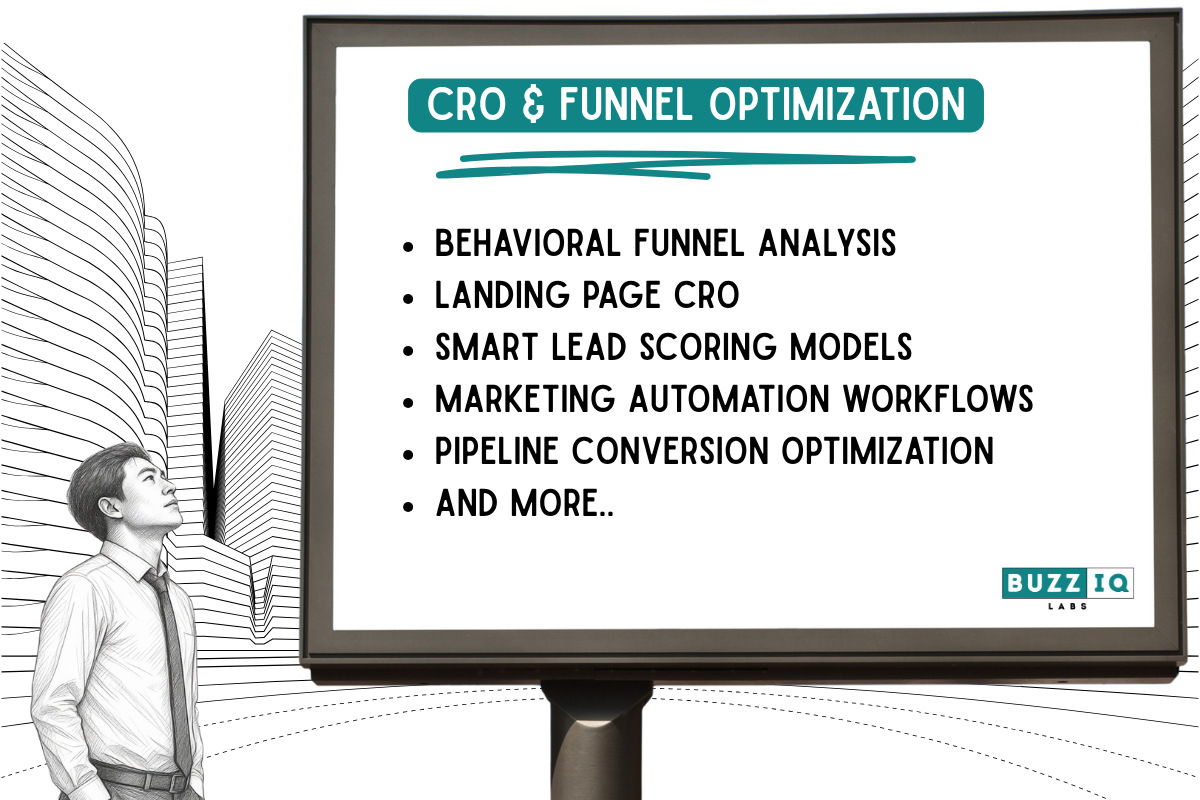
Conversion Rate Optimization (CRO) improves how effectively your website and landing pages convert visitors into leads. It ensures you maximize results from your existing traffic.
19 How can companies improve their demand generation strategy?
Companies can improve by defining a clear ICP, aligning sales and marketing, investing in high-quality content, leveraging analytics, and continuously optimizing campaigns, taking help from expert marketing partners like BuzzIQ Labs.
20 What makes BuzzIQ Labs different from other B2B marketing agencies?
BuzzIQ Labs focuses on building integrated, full-funnel demand generation systems rather than running isolated campaigns. The approach is centered on driving pipeline, revenue, and measurable business outcomes.
21 How does BuzzIQ Labs approach demand generation?
BuzzIQ Labs combines content, SEO, AEO, paid media, ABM, CRO, and analytics into a unified strategy. This ensures every marketing activity contributes directly to pipeline growth and revenue impact.
22 Which markets and geographies does BuzzIQ Labs cater to?
BuzzIQ Labs works with B2B organizations across APAC, EMEA, and North America. The team brings a global perspective while adapting strategies to regional market dynamics.
Latest From Our Blog
Read all the latest stories and posts from our blog here.